Why media relations just came full circle – and how to get journalists to actually notice you
Remember PR? Good old public relations? Well, it's back. And this time the machines are in the picture too. Here's how to get yourself covered, from someone who's been on both sides of the fence.
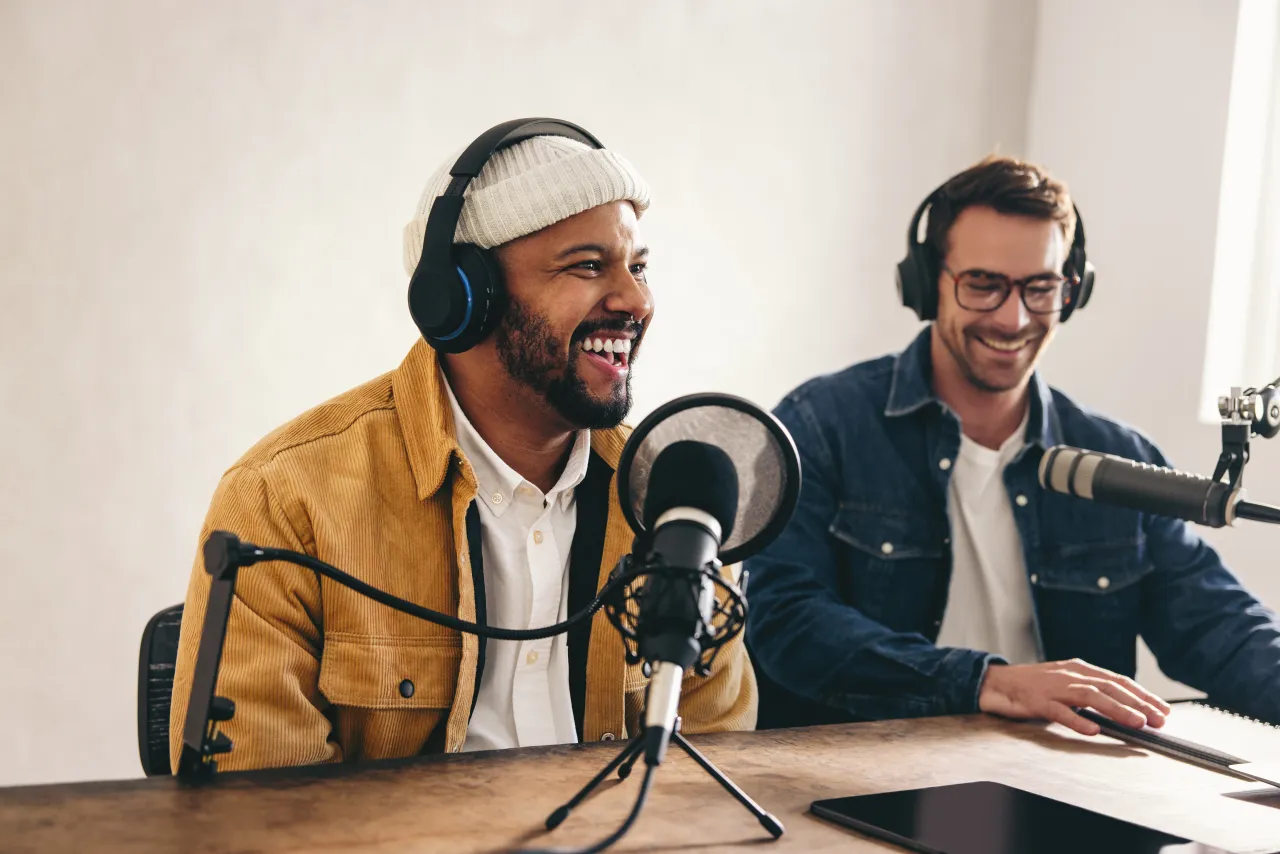
Image licensed via Adobe Stock
For the last 25 years, I've worked across both journalism and public relations. I started in radio, so I've been the person on the receiving end of the pitch, deciding in about 90 seconds whether someone is worth a feature. (By pitch, I mean a story pitched to the press, not the pitching-for-work kind.) And for over a decade I ran a PR agency in Manchester, so I've also been the one doing the pitching – getting media coverage for both brands and businesses, day in, day out. Which means I've seen exactly what works, and what doesn't.
For a while, we were all told that "traditional" media relations was slowly dying. The future, apparently, was SEO, keywords, backlinks and gaming the algorithm. Press releases were passé. Building actual relationships with journalists? A nice-to-have. Well. Look who's most definitely back.
Here's what's changed. When someone wants to find a great illustrator, for example, they aren't asking Google anymore; they're talking to ChatGPT, Claude or Google's AI Overviews. And they're believing what they're told.
And there's the thing. Those answers don't come from nowhere. They're derived from whatever's been written or said about you across the internet. All the interviews and features. Mentions on social media. The podcasts you've been on. And the interviews you've given.
There's a new name for optimising around this. It's called generative engine optimisation, short for GEO. It's a way to be recommended by the LLMs. This approach might be new(ish) to the industry, but the principle around it is familiar: to be recommended, you have to be known. To be known, well, you have to be talked about. That's where PR comes in.
In this case, it means "earned media", where a journalist chooses to write about you or a podcast host invites you onto their show. When I graduated in 2000, this kind of PR was worth a lot. When the internet and social media came onto the scene, it wasn't as valuable. Funny how things come full circle. Because it's now how AI determines who to recommend.
Having worked as both a journalist and in PR, I'll offer advice from both angles, so you'll have a better chance of getting that much-needed media coverage.
Part one: think like a journalist who's searching for creatives to write about
To understand the enemy - I mean, journalist - you have to think like one. They're usually very busy, working to tight deadlines. They don't have time to faff about. Which means they're more likely to write about you if they have a smooth experience.
That's why the creatives featured in Design Week, or It's Nice That, aren't necessarily the most talented: they're the ones who make the journalist's job easy.
What does that look like in principle? Ok, let's imagine I've discovered your work on Instagram and I want to find out more about you. I might click on your website link in your profile. I don't have much time, so what I find will determine whether you're worth a feature. Here's what will make any journalist happy.
A clear 'about' page
It baffles me how many brilliant creatives don't bother to have a decent 'about' page. We want to know who you are, what you do, where you're based, and what you're passionate about. Your website copy doesn't have to be clever. We just want to see a clear description that tells your story and gives us everything we need. That means half our research is done before we email you, saving us time.
A real email address, not just a contact form
A contact form is an obstacle. I want an email address. I don't have time to fill boxes and hope my message got through. So put an actual email address on your contact page, alongside the contact form (if you must), and I'm more likely to get in touch.
Reply as soon as possible
We're on deadline, always. If we reach out, we're hoping to hear back from you as soon as possible. Reply the same day. Hell, the same hour, if you can. Even if you're out and about, a simple acknowledgement that you've seen our message and will get back to us when you can is helpful.
Have images ready to go
When we write about someone on Creative Boom, we always need a decent portrait pic. If I have to email asking for one, wait a day, then chase, that's another obstacle I don't have time for. In which case, have professional, high-resolution headshots ready to download (a couple of options is even better) and provide credits for the photographer, if you need us to include anything.
An obvious "happy to talk" line
I've never really thought about it until now, but if there is no obvious sign that a creative is happy to chat with journalists, it can subconsciously feel off-putting. But if it's clear people are happy to talk, it suggests they're used to dealing with the press and will therefore be a great candidate for a quick feature. It gives "here's someone who'll be reliable" vibes.
If you're happy to do podcasts, for example, then say so. Add a line of copy on your about page saying you've got a decent microphone and webcam, ready for interviews. (If you haven't got the kit yet, I can highly recommend Shure for mics and Insta360 for cams.)
In fact, add a line saying you're open to press, features and interviews in general. It's an open door and makes us feel seen.
Add proof you've been featured before
Always see the same faces on every magazine and podcast show? Yeah, we journalists can be guilty of herd behaviour. I guess it's because when we see you've been featured elsewhere, we can relax because someone we respect has already vouched for you.
That's why an "as featured in" section on your website can be fruitful. Add a few links and logos to where you've been featured before, and it reassures any journalist that you're a great candidate for an interview. It also helps with your GEO, giving AIs a reason to recommend you.
Include a press page, if you can
Just because you're a freelancer or small studio, it doesn't mean you're not worthy enough for a press page. If you've got a website you can easily manage, add a brand new web page and call it 'For Press' or something obvious for journalists.
Include your bio, headshots, and logo. Make them downloadable via Dropbox or something similar. Have CMYK and RGB options available for visual assets. PNGs for web quality. Different sizes that will help. And include a folder of project case studies, cleared for use. Don't forget captions and credits – a simple text file or Word document in each relevant folder will suffice.
If you do all that, you've just made yourself the easiest person in the world to feature.
Part two: how to pitch to journalists yourself
We've covered how a journalist might approach and feature you. Now it's time to look at the other side... how you should contact them.
And it's advice we've already covered. In that, we need to make a journalist's life as easy as possible, removing every obstacle in their path.
Essentially, you don't want to make them chase or go back and forth. Here's how to make your pitch effortless.
Nothing generic, ever
We can smell a mail-merge from across the room. "Dear Editor, I thought this might interest your readers" tells me you haven't read a single thing we've published. Or worse, a "Dear Creative Bloom" or "Dear Design Boom" won't help either. Show me you know the publication, mention a piece you actually liked, tell me why this is for us. A short, specific, clearly human note beats a slick template every single time.
Have a news hook
Don't just send me a link to your portfolio; think about what might be newsworthy to us and interesting to our audience. For instance, do you have a side project that's making waves online? Did you start something creative for charity and raise loads of money? Have you launched a magazine, a shop, or a new line of accessories? What's the hook? Why would we want to find out more?
Send us everything we need first time
Don't tease us with your pitch email, offering to "share more if you're interested". Give us the whole thing up front: the story, images, credits, links – the whole context. Every extra step you make us take is another chance for us to lose momentum and drift off to the next email. Make the first message the only message we need.
Take any other annoying obstacles down
We're talking image links that expire in seven days because sometimes we don't see your email in time, and we don't want to chase. Or maybe you've done a 'password protect'. Same thing, different story.
We also dislike watermarked previews with "ask us for the hi-res" in the email body. And then there's the dreaded "let us know if you'd like the assets, and we'll send them over" line. Ugh. Please God, no.
Each of these is a little hurdle between you and the coverage you want. Take them all down. Assume I'm interested, and hand me everything as if I've already said yes.
Have a press pack ready to go
Like I said about your press page, a press pack is a folder of information and images, all ready to go. It's a "send everything" asset you spend time and effort pulling together once, then reuse forever.
It should contain a bio, headshots, logo, and project images with captions and credits – everything a journalist might ask for. It means when a magazine gets in touch and is on deadline, you've got everything ready to go – giving you a much higher chance of success.
Wrapping up
If you think about it, one theme runs through all the above advice: look outside your own world to understand others' needs and build relationships with the very people who can help get you recommended by LLMs.
Writing a clear about page and adding a real email address take time and effort, yes, but they can open doors. A decent press pack goes above and beyond and will please any writer or podcast host looking for interesting creatives to feature. And yes, increasingly, a machine reading the web on someone's behalf is more likely to pick you to put forward the more media coverage you get.
Be findable and helpful. Above all, make it ridiculously easy for people to say nice things about you. That's all PR ever was. Funny that it took a wave of AI to remind us... myself included.